IMO’s new stringent standards to come into force, the responsibility of the ship’s Master will increase manifold
Ship safety, seafarer training, and equipment will be directly impacted
New Delhi.
The International Maritime Organization (IMO) has announced major changes for the global shipping industry. From 1 January 2026, several new IMO regulations and amendments will come into force, affecting cargo vessels, passenger ships, and special-category ships operating worldwide.
The primary objective of these changes is to strengthen maritime safety, reduce accidents, and ensure a safer and more disciplined working environment for seafarers. With the implementation of the new rules, the role and responsibility of the ship’s Master (Captain) will become more crucial than ever before.
Major amendments to SOLAS
IMO has introduced significant amendments to the SOLAS (Safety of Life at Sea) Convention and its associated mandatory codes.
Once these rules come into effect, the construction, operation, safety standards, and inspection procedures of ships will become much stricter. This will have a direct impact on ship owners, operators, and classification societies, while also increasing the accountability of the ship’s Master.
By enforcing SOLAS Regulation II-1/3-13, IMO has laid down stringent safety standards for cranes, winches, and other lifting appliances installed on board ships.
Under these rules, the design, installation, testing, maintenance, and marking of such equipment will be mandatory in accordance with international standards.
Notably, these requirements will apply not only to new ships but also to lifting equipment installed on existing ships, which will now require regular inspection and certification. In the event of any technical deficiency, direct responsibility may be fixed on the ship’s Master.
Mandatory reporting of containers lost at sea
In view of maritime safety, IMO has adopted a new regulation under SOLAS Chapter V.
If a container falls overboard from a ship or a floating container is sighted at sea, immediate reporting will be mandatory.
This information must be reported to:
Nearby vessels,
The coastal State, and
The Flag State.
The report must include the position, number of containers, their details, and the nature of the cargo.
Major changes in seafarer training under the STCW Code
Under the amendments to the STCW Code, significant changes will also be introduced in seafarer training.
Under the Personal Safety and Social Responsibilities (PSSR) module, training related to:
Violence,
Harassment,
Sexual harassment,
Abuse, and
Appropriate response to such incidents
has now been made mandatory. This training will form part of Basic Safety Training.
Maintaining discipline and a safe environment on board will now be considered a key indicator of the Master’s leadership capability.
Ban on PFOS in firefighting foam
Keeping environmental and health protection in mind, IMO has imposed a ban on firefighting foam containing PFOS (Perfluorooctane Sulfonic Acid).
From 1 January 2026, the use of such foam will not be permitted on newly built ships, while existing ships will be required to provide proof of compliance during their first survey.
Amendments to other IMO codes
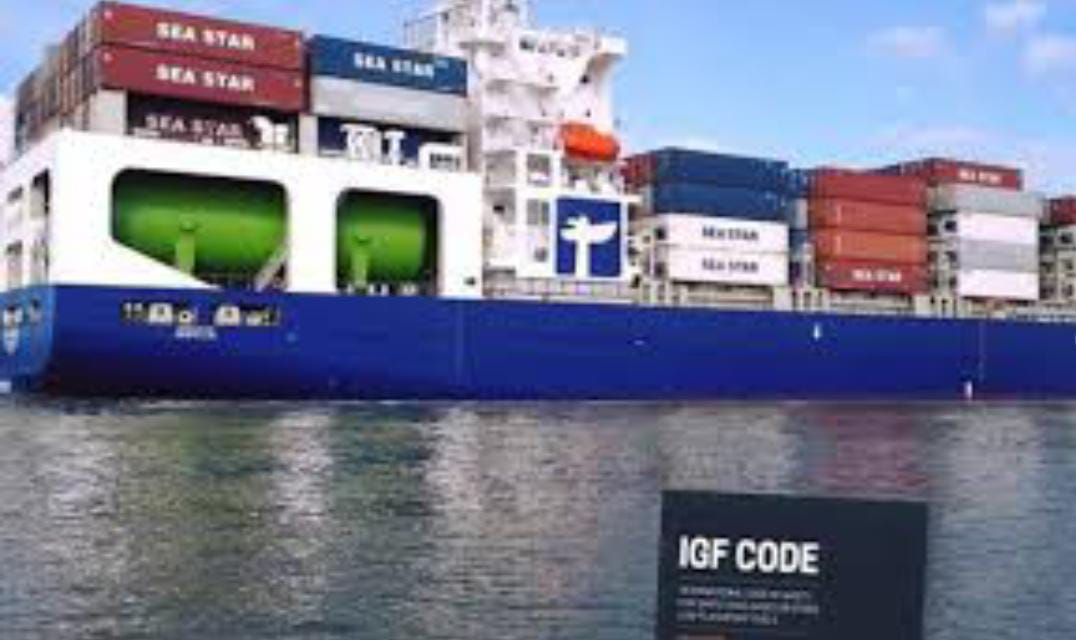
In addition, IMO has introduced amendments to the IGF Code, IMDG Code, IGC Code, ESP Code, and Grain Code. These cover regulations related to:
Ships operating on low-flashpoint fuels,
Carriage of dangerous goods,
Gas carriers,
Testing and maintenance of lifeboats and rescue boats.
These changes will apply to both new and existing ships.
Conclusion
The new IMO regulations coming into force from 1 January 2026 will take maritime safety to a new level. While technical and safety standards on board ships will become more stringent, the role of the ship’s Master will no longer be limited to navigation alone. The Master’s position will be further strengthened as a safety manager, legal representative, and guardian of the crew.